




| Research Article | ||
J Microbiol Infect Dis. 2026; 16(3): 165-171 J. Microbiol. Infect. Dis., (2026), Vol. 16(3): 165–171 Research Article In vitro antimicrobial profiling of Salvia officinalis extract against clinical periodontal pathogens and Candida albicans isolatesAbeer Edriwi1* and Ibrahim Daghman21Department of Microbiology and Immunology, Faculty of Medicine, Alasmarya Islamic University, Zliten, Libya 2Department of Microbiology, Faculty of Science, Misurata University, Misurata, Libya *Corresponding Author: Abeer Edriwi. Department of Microbiology and Immunology, Faculty of Medicine, Submitted: 26/01/2026 Revised: 11/07/2026 Accepted: 01/08/2026 Published: 28/08/2026 © 2025 Open Veterinary Journal
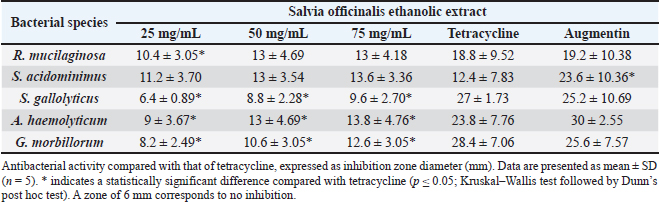
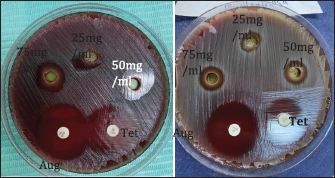
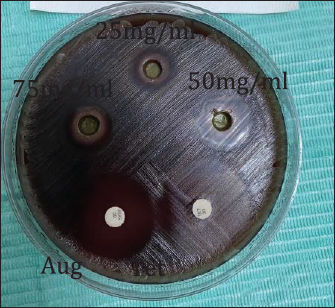
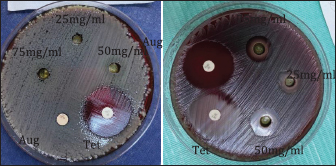
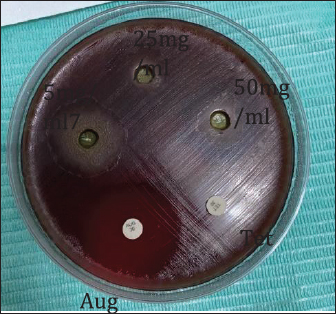
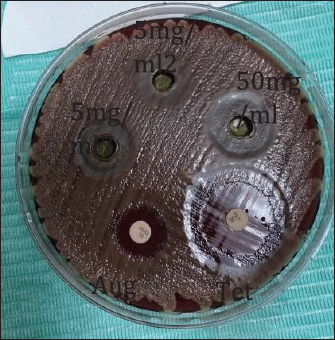
ABSTRACTBackground: Periodontitis is an inflammatory disease caused by complex microbial biofilms. It has a high prevalence rate and represents a major global health concern. Aim: Due to limitations of conventional therapies, phytotherapeutic agents such as Salvia officinalis (sage) are gaining increasing attention because of their antimicrobial and anti-inflammatory properties. Methods: The antimicrobial activity of an ethanolic extract of S. officinalis was evaluated using the agar well diffusion method. The extract was tested at concentrations of 25, 50, and 75 mg/ml against five periodontal bacterial (Rothia mucilaginosa, Streptococcus acidominimus, Streptococcus gallolyticus, Arcanobacterium haemolyticum, and Gemella morbillorum) and fungal (Candida albicans) isolates. Inhibition zones were measured and statistically compared with tetracycline, Augmentin, and nystatin. Results: The extract demonstrated a concentration-dependent antimicrobial effect that varied among the tested microbes. Significant activity was observed against R. mucilaginosa at 50 and 75 mg/ml, with no significant difference compared with tetracycline (p=0.132). Similarly, all concentrations showed comparable efficacy against S. acidominimus. In contrast, significantly lower activity was observed against S. gallolyticus, A. haemolyticum, and G. morbillorum (p < 0.001). The antifungal effect against C. albicans was also significantly lower than nystatin (p < 0.001). Conclusion: Salvia officinalis ethanolic extract demonstrates significant concentration-dependent antibacterial properties against specific bacteria associated with periodontitis. These findings indicate the potential antimicrobial function of S. officinalis ethanolic extract against selected oral pathogens; however, additional in vivo studies are required. Keywords: Antimicrobial activity, Candida albicans, Oral bacteria, Periodontal pathogens, Salvia officinalis ethanolic extract. IntroductionThe mouth is colonized by microorganisms a few hours after birth, mainly aerobic and facultative anaerobic species. A more complex microbial ecosystem is established with the eruption of teeth. More than 700 microbial species can inhabit the oral cavity, and more than 400 species have been identified in periodontal pockets (Paster et al., 2006). Periodontal diseases are polymicrobial infections that involve inflammation and progressive destruction of the supporting structures of teeth. In Libya, periodontal disease is highly prevalent, with reported rates as high as 75.7% (Fadilla and Sutan, 2011). Furthermore, studies conducted in Sebha suggest that a significant number of adults exhibit signs of destructive periodontitis (Peeran et al., 2012). Although antimicrobial agents are effective in managing infectious diseases, their widespread use has unfortunately led to the increasing issue of antimicrobial resistance. Additionally, with the increasing use of antibiotics, now we are facing not only an increasing threat of antibiotic resistance but also an arising concern about the potential long-term effects of antibiotics on human health, as they are implicated in disruption of gut microbiome, obesity, type 2 diabetes, inflammatory bowel disease, anxiety, autism, allergies, and autoimmune diseases (Leong et al., 2018). These concerns emphasize the need for effective and biologically safe alternative or adjunctive therapeutic approaches. Medicinal plants have gained increasing attention due to their antimicrobial and anti-inflammatory properties, accessibility, and relatively low cost. Recently, phytomedicine has assumed increasing importance as an alternative to conventional therapy (Mehta et al., 2014). Salvia officinalis (sage), a member of the Lamiaceae family, is widely used as a mouth rinse and in folk medicine. Beheshti-Rouy et al. (2015) showed that Salvia officinalis mouthwash significantly reduced Streptococcus mutans in dental plaque. The presence of compounds such as thujone, cineole, and camphor in Salvia essential oil is responsible for its antimicrobial and antioxidant properties (Ghorbani and Esmaeilizadeh, 2017). Furthermore, Salvia officinalis glycolic extract demonstrated effective antimicrobial activity against oral pathogens without causing cytotoxicity (De Oliveira et al., 2019). However, further studies are needed to evaluate its efficacy against microorganisms associated with periodontitis. Therefore, this study aimed to evaluate the in vitro antimicrobial activity of S. officinalis extract at concentrations of 25, 50, and 75 mg/ml against bacterial isolates and Candida albicans recovered from periodontal pockets in periodontitis patients. In addition, the efficacy of the extract was compared with that of standard antimicrobial agents, including tetracycline, Augmentin, and nystatin. Materials and MethodsStudy population and clinical examinationThe isolates of oral pathogens used in the current study were obtained from patients attending Al-Hureyat Polyclinic Center in Zliten, Libya, between September and November 2021. All participants underwent a thorough oral examination. The screening procedures, including collection of personal, dental, and medical histories and intraoral and extraoral examinations, were recorded in the patient questionnaires. The diagnosis of periodontitis was established based on standard clinical parameters, including bleeding on probing, assessed using the sulcus bleeding index (score 0: no bleeding; score 1: point bleeding within 30 seconds; and score 2: immediate bleeding), probing pocket depth (mm), clinical attachment loss (CAL), defined as the distance from the cemento-enamel junction to the base of the periodontal pocket, and tooth mobility. Participants were required to have at least 12 natural teeth (Guentsch et al., 2011). A total of 15 patients with moderate-to-severe periodontitis were included. The sample size was selected to obtain representative periodontal pathogens for in vitro antimicrobial testing rather than for epidemiological analysis. Sample collection and processingSubgingival plaque samples were collected from the periodontal pockets using sterile paper points following the method described by Décaillet et al. (2012). Immediately after collection, the samples were inoculated onto a blood agar plate. The inoculated plates were transported to the microbiology laboratory at Zliten Medical Center within 2–4 hours for further processing. Microbial isolation and identificationBacterial identification was performed using the Phoenix automated identification system according to the manufacturer’s instructions. The obtained isolates were used for subsequent in vitro antimicrobial susceptibility testing. Collection and preparation of experimental plantCollection and preparation of plant materialSalvia officinalis is a herbaceous plant belonging to the Lamiaceae family. It grows to a height of ~40–50 cm and has a strong root system. It is native to the Mediterranean and Middle Eastern regions. Its dried leaves are widely used as raw material in nutritional, pharmaceutical, and essential oil products, and have historically been used in addressing various health conditions such as nervous, cardiovascular, and respiratory disorders (Ghorbani and Esmaeilizadeh, 2017). Dried S. officinalis leaves were purchased from a local herbal store in Zliten, Libya. The plant material was then ground into a fine powder using a grinder and stored in sterile dark glass containers for subsequent extraction procedures. Preparation of the ethanolic extractPowder of S. officinalis leaves was extracted according to the method of Recio et al. (1989) with minor modifications. Briefly, 20 g of the dried leaf powder was added to 200 ml of 96% ethanol. The mixture was then agitated and placed on a shaker apparatus, which was lifted for 48 hours at room temperature. Thereafter, the extract was filtered to remove plant residues. The solvent was evaporated on a rotary evaporator apparatus under reduced pressure at 40°C. The extract was further dried at room temperature, collected in sterile capped bottles, and stored until use. The extraction yield was calculated using the following formula: (weight of dried extract/initial (3/20 g) × 100=15% The yield obtained was 15%. For antimicrobial assays, 1 g of the dried extract was dissolved in 10 ml of distilled water to obtain a stock solution (100 mg/ml). Serial dilutions were prepared to yield final concentrations of 25, 50, and 75 mg/ml. Before the antimicrobial assay, ethanol was removed from the extract, and the dried extract was mixed with distilled water for testing. Distilled water, used as a solvent, should not have any antimicrobial activity; a 6-mm diameter indicates no inhibition. Antimicrobial activity of S. officinalis against bacterial isolates and C. albicansThe antimicrobial activity of S. officinalis extract was evaluated using the agar well diffusion method against selected oral bacterial isolates and C. albicans. This method was employed as a preliminary screening tool to assess the antimicrobial potential of the extract. Bacterial antimicrobial assayThe antibacterial activity of S. officinalis was evaluated using the agar well diffusion method as described by Athanassiadis et al. (2009) and Mirtaghi et al. (2016). The extract was tested at concentrations of 25, 50, and 75 mg/ml against five bacterial isolates: Rothia mucilaginosa, Streptococcus acidominimus, Streptococcus gallolyticus, Arcanobacterium haemolyticum, and Gemella morbillorum. Bacteria isolated from periodontal pockets were selected by frequency and representation. One representative isolate per species was included per patient. Isolates were not pooled. Bacterial suspensions were standardized to 0.5 McFarland and uniformly inoculated onto blood agar plates using sterile swabs. Wells (6-mm diameter) were prepared and filled with 25 µl of each extract concentration. Plates were incubated at 37°C for 18–24 hours. Commercial antibiotic discs (Oxoid, UK), tetracycline (30 µg), and Augmentin (30 µg) discs were used as positive controls. No negative control was included, which is a limitation of this study. Distilled water was used as the solvent and is not expected to exhibit antimicrobial activity. Wells with a diameter of 6 mm were made using a sterile Pasteur pipette. Each of three wells per plate was filled with 25 µl of each extract concentration (25, 50, and 75 mg/ml). Plates were then incubated at 37°C for 18–24 hours. Zones of inhibition were measured in millimeters using a ruler. Each experiment was performed in five independent replicates, and the mean diameter of the inhibition zone was recorded. Antifungal assay against C. albicansThe antifungal activity against C. albicans was assessed using the agar well diffusion method according to Agnese and Cabrera (1999). A standardized yeast inoculum (100 µl) was spread onto Sabouraud dextrose agar (CONDA®) supplemented with chloramphenicol and gentamicin. Wells (6-mm diameter) were filled with 25 µl of extract concentrations (25, 50, and 75 mg/ml). Nystatin (100,000 IU/ml) was used as the positive control. Plates were incubated at 37°C for 24 hours, and inhibition zones were measured using a ruler in millimeters. Anticandidal activity was determined by measuring the zone of inhibition (Sadeghi Nejad et al., 2014).All assays were performed in five independent replicates. Statistical analysisData were analyzed using SPSS version 25. Normality was assessed using the Kolmogorov–Smirnov and Shapiro–Wilk tests. Because the data were not normally distributed, nonparametric tests were applied. Differences between groups were evaluated using the Kruskal–Wallis test followed by Dunn’s post-hoc test. Results were expressed as mean ± SD, with statistical significance set at p < 0.05. Ethical approval and consent to participateEthical approval was obtained from the relevant institutional ethics committee of Alasmarya Islamic University under reference number: AIU-REC-2026-02 (retrospectively approved). The confidentiality of personal data was strictly maintained. ResultsAntibacterial activity of S. officinalis ethanolic extractThe antibacterial activity of the S. officinalis ethanolic extract against the tested periodontopathogenic bacterial isolates (Table 1) varied according to the bacterial species and extract concentration. In general, higher extract concentrations were associated with larger inhibition zones. For R. mucilaginosa (Fig. 1), both 50 and 75 mg/ml concentrations produced inhibition zones with a mean diameter of 13 mm, with no statistically significant differences observed when compared with tetracycline (p=0.132) or Augmentin (p=0.109). At a concentration of 25 mg/ml, the extract showed a reduced inhibition zone of 10.4 mm against R. mucilaginosa, which was significantly lower than tetracycline (p=0.032) and Augmentin (p=0.029). For S. acidominimus (Fig. 2), the mean inhibition zones were 11.2, 13, and 13.6 mm at concentrations of 25, 50, and 75 mg/ml, respectively. No statistically significant differences were observed when compared to tetracycline. However, statistically significant differences were observed when compared with Augmentin (p=0.001, 0.004, and 0.006 for 25, 50, and 75 mg/ml, respectively). For S. gallolyticus (Fig. 3), the inhibition zones were 6.4, 8.8, and 9.6 mm at concentrations of 25, 50, and 75 mg/ml, respectively, with statistically significant differences compared with both tetracycline and Augmentin (p < 0.05). For A. haemolyticum (Fig. 4), the inhibition zones were 9, 13, and 13.8 mm at concentrations of 25, 50, and 75 mg/ml, respectively. Statistically significant differences were observed when compared with both tetracycline and Augmentin (p < 0.05). For G. morbillorum (Fig. 5), the inhibition zones were 8.2, 10.6, and 12.6 mm at concentrations of 25, 50, and 75 mg/ml, respectively, with statistically significant differences compared with both tetracycline and Augmentin (p < 0.05). Antifungal activity of S. officinalis ethanolic extract against C. albicansThe antifungal activity of S. officinalis ethanolic extract against C. albicans (Table 2) was relatively low at all tested concentrations. The mean inhibition zone diameters were 6.2, 6.4, and 7.4 mm for 25, 50, and 75 mg/ml, respectively (Fig. 6). All tested concentrations showed statistically significant differences when compared with nystatin (p < 0.05), indicating lower antifungal activity than the standard antifungal agent. Table 1. Antibacterial activity of Salvia officinalis ethanolic extract (25, 50, and 75 mg/ml) against selected periodontopathogenic bacteria, compared with tetracycline and Augmentin.
Fig. 1. Antimicrobial activity of Salvia officinalis extract (25, 50, and 75 mg/ml) against R. mucilaginosa on blood agar using the agar well diffusion method, compared with tetracycline and amoxicillin/clavulanic acid (Augmentin).
Fig. 2. Antimicrobial activity of Salvia officinalis extract (25, 50, and 75 mg/ml) against S. acidominimus on blood agar using the agar well diffusion method, compared with tetracycline and amoxicillin/clavulanic acid (Augmentin).
Fig. 3. Antimicrobial activity of Salvia officinalis extract (25, 50, and 75 mg/ml) against S. gallolyticus on blood agar using the agar well diffusion method, compared with tetracycline and amoxicillin/clavulanic acid (Augmentin).
Fig. 4. Antimicrobial activity of Salvia officinalis extract (25, 50, and 75 mg/ml) against A. haemolyticum on blood agar using the agar well diffusion method, compared with tetracycline and amoxicillin/clavulanic acid (Augmentin). DiscussionThe in vitro antimicrobial activity of S. officinalis ethanolic extract against selected periodontal bacterial isolates and C. albicans was evaluated. Results showed a concentration-dependent antimicrobial effect, where higher concentrations (50–75 mg/ml) exhibited larger zones of inhibition than lower concentrations. The observed differences in antibacterial activity among tested bacterial species may be due to intrinsic variations in their cell wall structure, membrane permeability, and resistance mechanisms. Gram-positive bacteria possessing relatively permeable peptidoglycan layers might exhibit higher susceptibility to phytochemical compounds than organisms with more robust defense mechanisms. Here, R. mucilaginosa and S. acidominimus demonstrated relatively higher susceptibility to the extract, especially at higher concentrations, whereas S. gallolyticus and A. haemolyticum showed reduced sensitivity, suggesting species-dependent variability in response to the extract.
Fig. 5. Antimicrobial activity of Salvia officinalis extract (25, 50, and 75 mg/ml) against G. morbillorum on blood agar using the agar well diffusion method, compared with tetracycline and amoxicillin/clavulanic acid (Augmentin). The antimicrobial activity of S. officinalis may be attributed to its phytochemical composition. Sage contains phenolic compounds, flavonoids, and terpenoids, including rosmarinic acid, carvacrol, camphor, and 1,8-cineole (Hrebień-Filisińska et al., 2025). These compounds exhibit antimicrobial effects through several mechanisms, including disruption of bacterial cell membranes, increased membrane permeability, inhibition of enzyme activity, and interference with nucleic acid synthesis (Bouloumpasi et al., 2024). The crude ethanolic extract used in this study probably achieves its effect through a synergistic interaction among these bioactive constituents rather than a single isolated compound. The antibacterial effects were more pronounced at higher concentrations, whereas the activity was reduced at lower concentrations. This dose-dependent pattern is consistent with previous studies and indicates that a threshold concentration of active compounds is required to achieve measurable antimicrobial effects. At lower concentrations, the reduced availability of active constituents may restrict interaction with microbial cells, leading to smaller inhibition zones. The extract displayed varying levels of activity when compared with conventional antibiotics, such as tetracycline and Augmentin. In some cases, especially against R. mucilaginosa and S. acidominimus, the extract exhibited inhibitory effects comparable to those of tetracycline at elevated concentrations. However, in most comparisons, the standard antibiotics exhibited a significantly stronger antimicrobial effect. This outcome is expected because manufactured antibiotics have well-defined mechanisms of action and greater potency than crude plant extracts, which represent complex mixtures of compounds with lower effective concentrations of their active agents. The reduced susceptibility observed in certain organisms, such as G. morbillorum, might be attributed to its documented multidrug-resistant characteristics. Despite being facultative anaerobic, G. morbillorum grows optimally in enriched media but could be mistakenly identified as Viridans streptococci due to a similar phenotype. Resistance mechanisms such as efflux pumps, target modification, and reduced permeability may play a role in the decreased sensitivity to plant-derived compounds (Li et al., 2025). Previous studies, including El-Sayed et al. (2014), have reported that sage extracts have weak activity against this organism, which is consistent with the results of the current study. Table 2. Antifungal activity of Salvia officinalis ethanolic extract (25–75 mg/ml) against C. albicans compared with that of nystatin, expressed as inhibition zone diameter (mm).
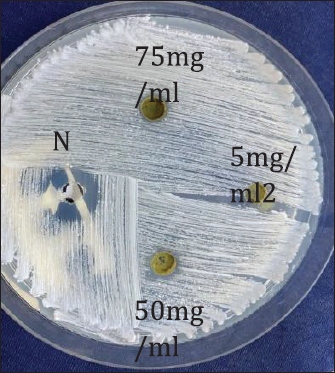
Fig. 6. Antimicrobial activity of Salvia officinalis extract (25, 50, and 75 mg/ml) against C. albicans on Sabouraud dextrose agar (with chloramphenicol and gentamicin) using the agar well diffusion method, compared with Nystatin. The antifungal activity of the extract against C. albicans was relatively limited across all concentrations. Although slight increases in inhibition zones were noted with higher concentrations, the overall antifungal effect remained weak compared with that of nystatin (Veličković et al., 2003). This finding is consistent with the weak antimycotic activity of Salvia officinalis hydrosol against Candida species reported by Politi et al. (2022).This might be attributable to the structural and physiological characteristics of C. albicans, such as its eukaryotic cellular organization, which distinguishes it from bacterial targets and could diminish its susceptibility to certain phytochemical compounds. The differences observed between the results of this study and some previously reported stronger antifungal effects could be due to variations in extraction methods, solvent systems, phytochemical composition, and experimental conditions. Variations in environmental factors, plant origin, and preparation techniques can significantly impact the concentration and availability of active compounds, as highlighted by Pavić et al. (2019). Several limitations should be acknowledged when interpreting the results of this study. While the agar well diffusion method is widely used and appropriate for preliminary antimicrobial screening, it is a semiquantitative approach that does not allow for the precise determination of Minimum Inhibitory Concentration or Minimum Bactericidal Concentration/Minimum Fungicidal Concentration values. Therefore, the findings of this study should be considered exploratory rather than conclusive. ConclusionThe present study demonstrated that S. officinalis ethanolic extract exhibits concentration-dependent antibacterial activity against selected periodontal pathogens, with more pronounced effects observed at higher concentrations (50–75 mg/ml). The efficacy of the extract varied among different bacterial species, with relatively higher activity against R. mucilaginosa and S. acidominimus, while limited effects were observed against other tested organisms. In contrast, the antifungal activity of the extract against C. albicans was minimal under the conditions of this study, indicating limited efficacy compared with standard antifungal agents such as nystatin. Although the findings suggest that S. officinalis possesses potential antimicrobial properties, its activity remains lower than that of conventional antibiotics, and it was observed only at relatively high concentrations. Therefore, the results should be considered preliminary. Further studies using standardized methods, including determination of MIC and MBC/MFC values, are recommended to evaluate the antimicrobial potential of S. officinalis. Such investigations may help clarify its possible role as an adjunctive therapeutic agent in the management of periodontal infections. AcknowledgmentsThe authors would like to thank the editors and the anonymous reviewers for their insightful suggestions. Conflict of interestThe authors declare no potential conflicts of interest concerning the research, authorship, and/or publication of this article. FundingNone. Authors’ contributionsAbeer Edriwi conceived and designed the study, collected and analyzed the data, interpreted the results, and drafted the manuscript. Ibrahim Daghman provided general supervision during the study and approved the final version of the manuscript. Data availabilityAll data generated or analyzed during this study are included in this published article. ReferencesAgnese P.M. and Cabrera. 1999. The essential oil of Senecio graveolens (Compositae): chemical composition and antimicrobial activity tests. J. Ethnopharmacology. 66(1), 91–96. Athanassiadis, B., Abbott, P., George, N. and Walsh, L. 2009. An in vitro study of the antimicrobial activity of some endodontic medicaments and their bases using an agar well diffusion assay. Austral. Dental J. 54(2), 141–146. Beheshti-Rouy, M., Azarsina, M., Rezaie-Soufi, L., Alikhani, M.Y., Roshanaie, G. and Komaki, S. 2015. The antibacterial effect of sage extract (Salvia officinalis) mouthwash against Streptococcus mutans in dental plaque: a randomized clinical trial. Iranian J. Microbiol. 7(3), 173. Bouloumpasi, E., Hatzikamari, M., Christaki, S., Lazaridou, A., Chatzopoulou, P., Biliaderis, C.G. and Irakli, M. 2024. Assessment of antioxidant and antibacterial potential of phenolic extracts from post-distillation solid residues of oregano, rosemary, sage, lemon balm, and spearmint. Processes 12(1), 140; doi:10.3390/pr12010140 De Oliveira, J.R., Vilela, P.G.D.F., Almeida, R.B.A., De Oliveira, F.E., Carvalho, C.A.T., Camargo, S.E.A., Jorge, A.O.C. and De Oliveira, L.D. 2019. Antimicrobial activity of noncytotoxic concentrations of Salvia officinalis extract against bacterial and fungal species from the oral cavity. Gen. Dentistry 67(1), 22–26. Décaillet, F., Giannopoulou, C., Cionca, N., Almaghlouth, A. and Mombelli, A. 2012. Microbial profiles of patients seeking treatment for periodontitis: influence of origin, smoking and age?. Schweiz Monatsschr Zahnmed 122(3), 198–204. El-Sayed, M.H., Refaat, B.M. and Sharaf, J. 2014. Microbiological evaluation of antibacterial potentiality of some edible plant extracts against multidrug resistant (MDR) human pathogens. Int. Curr. Pharm. J. 4(1), 336–339. Fadilla, Y.I. and Sutan, R. 2011. Proportion and factors related to periodontal disease among young adult attended Al-fatah dental faculty, Libya. Malaysian. J. Public. Health. Med. 11(2), 40–43. Ghorbani, A. and Esmaeilizadeh, M. 2017. Pharmacological properties of Salvia officinalis and its components. J. Traditional. Complementary. Med. 7(4), 433–440. Guentsch, A., Kramesberger, M., Sroka, A., Pfister, W., Potempa, J. and Eick, S. 2011. Comparison of gingival crevicular fluid sampling methods in patients with severe chronic periodontitis. J. Periodontology 82(7), 1051–1060. Hrebień-Filisińska, A.M., Felisiak, K., Tokarczyk, G., Czachura, Z. and Kiliański, K. 2025. Content of carnosic acid, carnosol, rosmarinic acid, and proximate composition in an assortment of dried sage (Salvia officinalis L.). Molecules 30(23), 4569; doi:10.3390/molecules30234569 Leong, K.S.W., Derraik, J.G.B., Hofman, P.L. and Cutfield, W.S. 2018. Antibiotics, gut microbiome and obesity. Clin. Endocrinol. 88(2), 185–200. Li, Y., Zhu, L., Yang, W. and You, C. 2025. Bloodstream infection caused by coinfection of Actinomyces turicensis and Gemella morbillorum: a case report and literature review. Front. Med. 12, 1626567; doi:10.3389/fmed.2025.1626567 Mehta, V.V., Rajesh, G., Rao, A., Shenoy, R. and Pai B.H.M. 2014. Antimicrobial efficacy of Punica granatum mesocarp, Nelumbo nucifera leaf, Psidium guajava leaf and Coffea canephora extract on common oral pathogens: an in-vitro study. J. Clin. Diagnostic Res. 8(7), ZC65–ZC68. Mirtaghi, S.M., Torbati Nejad, P., Mazandarani, M., Livani, F. and Bagheri, H. 2016. Evaluation of antibacterial activity of Urtica dioica L. leaf ethanolic extract using agar well diffusion and disc diffusion methods. Med. Lab. J. 10(5), 15–21. Paster, B.J., Olsen, I., Aas, J.A. and Dewhirst, F.E. 2006. The breadth of bacterial diversity in the human periodontal pocket and other oral sites. Periodontology. 2000. 42(7), 87. Pavić, V., Jakovljević, M., Molnar, M. and Jokić, S. 2019. Extraction of carnosic acid and carnosol from sage (Salvia officinalis L.) leaves by supercritical fluid extraction and their antioxidant and antibacterial activity. Plants. (Basel). 8(1), 16; doi:10.3390/plants8010016 Peeran, S.W., Singh, A.J.A.R., Alagamuthu, G., Peeran, S.A. and Naveen Kumar, P.G. 2012. Periodontal status and risk factors among adults of Sebha City (Libya). Int. J. Dentistry. Politi, M., Ferrante, C., Menghini, L., Angelini, P., Flores, G.A., Muscatello, B., Braca, A. and De Leo, M. 2022. Hydrosols from Rosmarinus officinalis, Salvia officinalis, and Cupressus sempervirens: phytochemical analysis and bioactivity evaluation. Plants 11(3), 349; doi:10.3390/plants11030349 Recio, M.C., Rios, J.L. and Villar, A. 1989. Antimicrobial activity of selected plants employed in the Spanish Mediterranean area. Part II. Phytotherapy Res. 3(3), 77–80. Sadeghi Nejad, B., Rajabi, M., Zarei Mamoudabadi, A. and Zarrin, M. 2014 In vitro anti-Candida activity of the hydroalcoholic extracts of Heracleum persicum fruit against pathogenic Candida species’. Jundishapur J. Microbiol. 7(1), e8703; doi: 10.5812/jjm.8703 Velickovic, D., Randjelovic, N., Ristic, M., Velickovic, A. and Smelcerovic, A. 2003. Chemical constituents and antimicrobial activity of the ethanol extracts obtained from the flower, leaf and stem of Salvia officinalis L. J. Serbian. Chem. Soc. 68(1), 17–24. | ||

| How to Cite this Article |
| Pubmed Style Edriwi A, Daghman I. In vitro antimicrobial profiling of Salvia officinalis extract against clinical periodontal pathogens and Candida albicans isolates. J Microbiol Infect Dis. 2026; 16(3): 165-171. doi:10.5455/JMID.2026.v16.i3.6 Web Style Edriwi A, Daghman I. In vitro antimicrobial profiling of Salvia officinalis extract against clinical periodontal pathogens and Candida albicans isolates. https://www.jmidonline.org/?mno=308073 [Access: August 28, 2026]. doi:10.5455/JMID.2026.v16.i3.6 AMA (American Medical Association) Style Edriwi A, Daghman I. In vitro antimicrobial profiling of Salvia officinalis extract against clinical periodontal pathogens and Candida albicans isolates. J Microbiol Infect Dis. 2026; 16(3): 165-171. doi:10.5455/JMID.2026.v16.i3.6 Vancouver/ICMJE Style Edriwi A, Daghman I. In vitro antimicrobial profiling of Salvia officinalis extract against clinical periodontal pathogens and Candida albicans isolates. J Microbiol Infect Dis. (2026), [cited August 28, 2026]; 16(3): 165-171. doi:10.5455/JMID.2026.v16.i3.6 Harvard Style Edriwi, A. & Daghman, . I. (2026) In vitro antimicrobial profiling of Salvia officinalis extract against clinical periodontal pathogens and Candida albicans isolates. J Microbiol Infect Dis, 16 (3), 165-171. doi:10.5455/JMID.2026.v16.i3.6 Turabian Style Edriwi, Abeer, and Ibrahim Daghman. 2026. In vitro antimicrobial profiling of Salvia officinalis extract against clinical periodontal pathogens and Candida albicans isolates. Journal of Microbiology and Infectious Diseases, 16 (3), 165-171. doi:10.5455/JMID.2026.v16.i3.6 Chicago Style Edriwi, Abeer, and Ibrahim Daghman. "In vitro antimicrobial profiling of Salvia officinalis extract against clinical periodontal pathogens and Candida albicans isolates." Journal of Microbiology and Infectious Diseases 16 (2026), 165-171. doi:10.5455/JMID.2026.v16.i3.6 MLA (The Modern Language Association) Style Edriwi, Abeer, and Ibrahim Daghman. "In vitro antimicrobial profiling of Salvia officinalis extract against clinical periodontal pathogens and Candida albicans isolates." Journal of Microbiology and Infectious Diseases 16.3 (2026), 165-171. Print. doi:10.5455/JMID.2026.v16.i3.6 APA (American Psychological Association) Style Edriwi, A. & Daghman, . I. (2026) In vitro antimicrobial profiling of Salvia officinalis extract against clinical periodontal pathogens and Candida albicans isolates. Journal of Microbiology and Infectious Diseases, 16 (3), 165-171. doi:10.5455/JMID.2026.v16.i3.6 |


